
How to Build a Simple B2B Follow-Up System
A practical framework for building a simple B2B follow-up system that improves response rates, opportunity progression, and pipeline conversion.
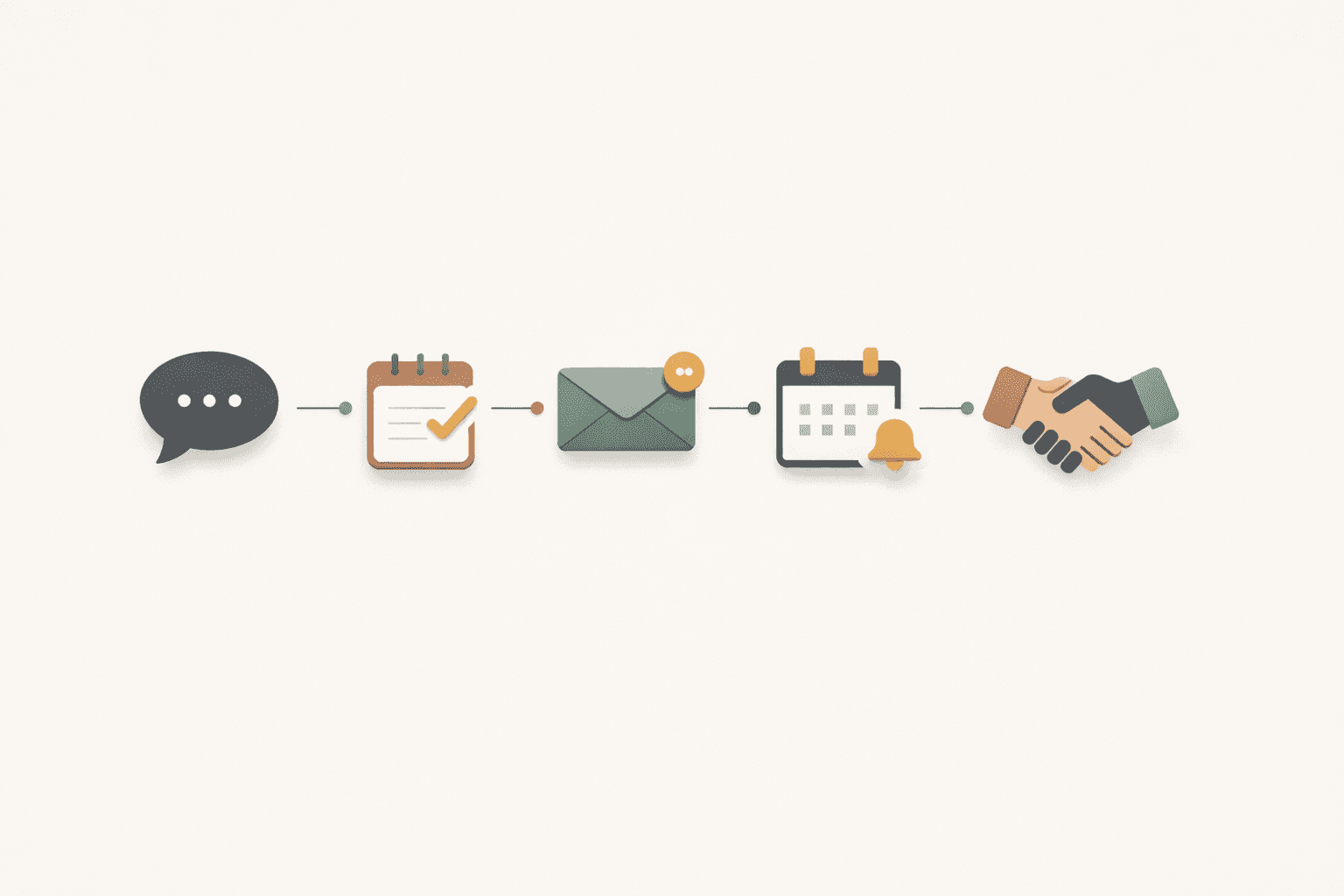
Many B2B firms do enough prospecting to create interest, but not enough process to convert interest into movement. The result is a pipeline full of stalled opportunities and conversations that should have progressed but did not.
Why follow-up is usually the hidden revenue leak
When teams review commercial performance, they often focus first on top-of-funnel numbers: leads, list size, outreach volume, meetings booked. Those numbers matter, but they often distract from the quieter issue underneath: opportunities are being lost because follow-up is inconsistent, slow, or too passive.
In high-ticket B2B, silence rarely means no forever. It often means timing shifted, priorities changed, or the prospect needs more context and momentum than the current process provides.
What a follow-up system needs to do
A good follow-up system should do three things. First, make sure every live conversation has a next step. Second, make ownership explicit. Third, ensure the business can keep momentum without relying on memory.
If a prospect goes quiet and nobody knows when to re-engage, what to say, or who should do it, the issue is not seller effort. It is missing infrastructure.
Build stages, not a vague list of contacts
One of the biggest mistakes smaller B2B firms make is treating all open conversations as one undifferentiated group. Instead, define a few simple pipeline stages such as: contacted, replied, discovery booked, qualified opportunity, proposal out, active follow-up, and closed.
Once the stages exist, follow-up becomes easier because the team can match action to context.
Create clear next-step rules
Each stage should have a default next action. After a discovery call, schedule the next meeting or decision point. After a proposal, define when and how it will be reviewed. After a positive reply, move quickly to qualify fit instead of letting the thread drift.
This sounds basic, but it is where a lot of revenue is quietly lost.
Use message variety instead of repetition
Follow-up should not mean sending the same “just checking in” message four times. A good system uses different reasons to re-engage: recap a commercial problem, share a relevant perspective, revisit a timing question, clarify next steps, or bring the discussion back to a business outcome.
The goal is to add momentum, not merely create activity.
Set a cadence that matches ticket size
High-ticket B2B deals usually need a longer, more deliberate follow-up rhythm than lower-ticket sales. That means a mix of fast follow-up after meaningful interactions and patient re-engagement when timing is uncertain.
A system should protect against two extremes: giving up too early or chasing too often without adding value.
Make visibility non-negotiable
A follow-up system only works if the team can see where conversations sit. Every live opportunity should show the last touchpoint, next planned touchpoint, owner, and current stage. That allows weekly review to focus on deal movement instead of guesswork.
Visibility turns follow-up from a reactive habit into an operating discipline.
Final takeaway
A lot of pipeline problems are not prospecting problems. They are progression problems. The firm did enough to earn interest, but not enough to move it forward.
A simple follow-up system creates consistency, improves conversion, and makes pipeline less dependent on memory and mood. For many B2B firms, that alone unlocks meaningful growth.
If growth still relies on word of mouth, inconsistent outbound, or founder-led follow-up, we help owner-led B2B firms build the commercial system behind a more predictable pipeline — from outreach and follow-up to qualification and conversion.