
Cold Email for High-Ticket B2B Services
A practical guide to cold email for high-ticket B2B services, including targeting, message quality, and follow-up principles that improve reply rates.
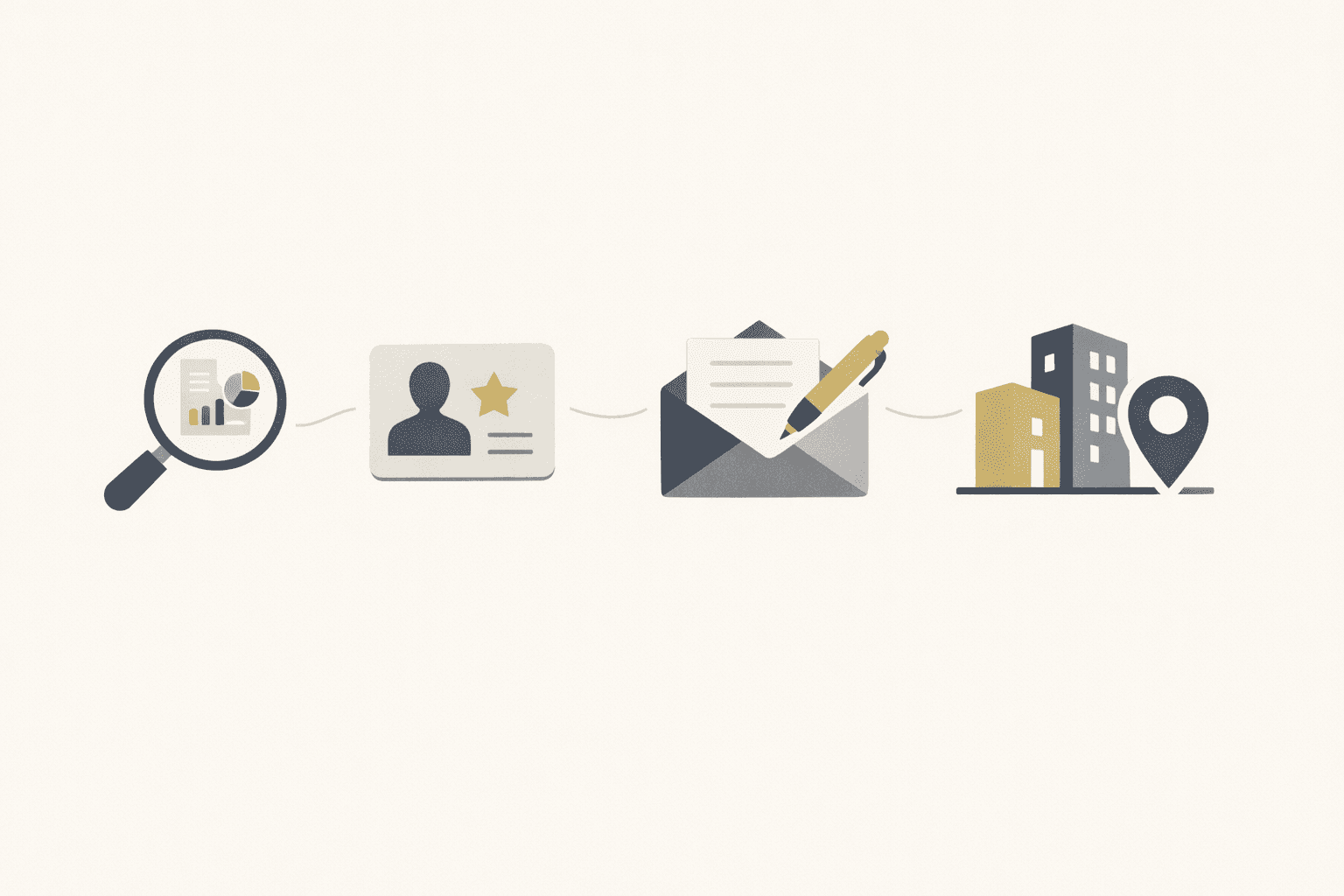
Cold email still works in high-ticket B2B, but only when relevance is strong. The market is not rejecting the channel as much as it is rejecting weak targeting and generic copy.
Why cold email underperforms for many firms
The most common failure pattern is simple: broad list, vague message, weak follow-up. When that happens, reply rates stay low and the team concludes the channel has been saturated.
In reality, cold email remains useful because it is direct, testable, and scalable enough for firms that want controlled pipeline generation. The difference lies in execution quality.
Start with segment quality, not copy hacks
The strongest improvement lever in cold email is often list quality, not wording. If the recipient is unlikely to feel the pain you solve, no line break, subject line, or clever phrase will rescue the message.
That is why high-ticket B2B email starts with a tightly defined ICP and a list built around real fit signals.
Write for relevance, not persuasion theatre
Many cold emails try too hard to sound polished, clever, or overly persuasive. High-ticket buyers usually respond better to messages that sound commercially aware, direct, and specific.
The purpose of the first email is not to tell the whole story. It is to create enough relevance and curiosity for a reply or a short conversation.
Use pain patterns the market already recognises
A good email often points to a business reality the recipient can easily identify: inconsistent pipeline, weak follow-up, founder dependence, underperforming outreach, unclear positioning, or poor conversion between stages.
When the pain is recognisable and the message is concise, response quality improves dramatically.
Follow-up is where most of the value sits
Many email sequences stop too early. High-ticket deals usually require more than one touchpoint, but those touchpoints should vary in angle and maintain commercial relevance.
A structured follow-up sequence is not about nagging. It is about making sure timing gaps do not automatically kill live opportunities.
What to avoid
Avoid long introductions, over-personalised fluff, feature dumping, and vague benefit language. Avoid pushing for a full sale from the first touch.
Cold email works better when it sounds like the start of a serious business conversation, not a performance.
How to judge success
Open rates matter less than relevance outcomes. The real questions are: are the right people replying, are those replies progressing into useful conversations, and are opportunities entering the pipeline at a quality level worth pursuing?
That is how high-ticket cold email should be measured.
Final takeaway
Cold email is not dead for high-ticket B2B services. Generic outreach is. If the ICP is clear, the pain pattern is real, and follow-up is disciplined, email remains a strong lever for controlled pipeline generation.
The goal is not to get any reply. It is to get the right reply from the right buyer.
If your cold emails are getting ignored, we help high-ticket B2B firms improve list quality, message relevance, and follow-up structure — so outreach produces better replies, not just more sends.